How to Smile Naturally in Photos: A Science-Backed Guide
Learn how to smile naturally in photos using the trick psychologists use to spot a real smile, plus simple habits that stop your smile from looking posed.

8 min read

The short answer for how to smile naturally in photos: stop managing your mouth and give yourself something real to react to.A genuine reaction automatically pulls in the muscles around your eyes, which is the one thing a posed "say cheese" smile almost never does.
That single difference is why some photos of you look relaxed and happy while others look stiff, even when you were smiling just as hard in both. The good news is that a natural-looking smile isn't about luck or good genes — it's a handful of small, learnable habits. This guide walks through what actually makes a smile look genuine, the habits that help you get there, and the mistakes that quietly work against you.
How to Smile Naturally in Photos: The Short Version
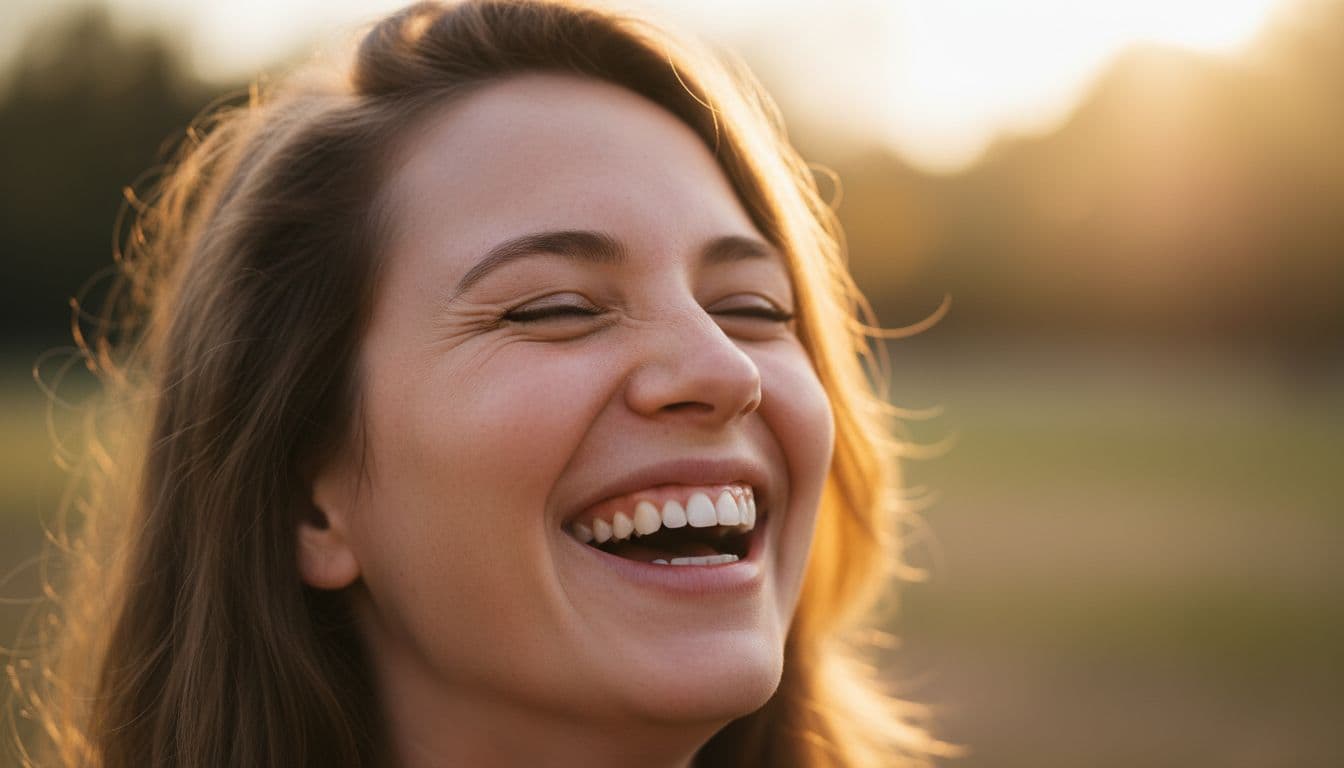
A genuine smile is a Duchenne smile: one where the corners of your mouth lift and the muscles around your eyes engage at the same time, crinkling their outer corners. A posed smile usually only does the first part. If you want to smile naturally in photos, the goal isn't a bigger mouth movement — it's giving your face a real reason to react.
This matters for more than vanity. A headshot, a dating profile photo, or a team page picture is often the first thing a stranger sees of you, and a natural expression changes how that first impression lands. If you want a shortcut once you understand the principle, our guide to taking selfies for AI headshots covers how to set up the shot itself, and an app like a good AI headshot generator can turn your most natural, relaxed selfies into a polished, professional photo without a single forced pose.
Why So Many Smiles Look Fake in Photos
When someone says "smile" and you consciously pull your mouth upward, you're producing a smile from the outside in. According to Psychology Today's reporting on why posed smiles look fake, a genuine smile actually starts in the brain's emotional circuitry rather than in the facial muscles themselves — so a smile made only of mouth movement reads as posed because it is.
The fix isn't to try harder with your mouth. It's to change what your brain is doing in the second before the shutter clicks: find something genuinely funny, awkward, or warm about the moment, and let your face follow. Lighting plays a supporting role too — harsh, flat light can make even a real smile look tense, so it helps to also fix bad lighting in your photos before you worry about your expression.
The Duchenne Smile: What Your Eyes Give Away
The genuine version of a smile is named after 19th-century French neurologist Guillaume Duchenne, who first studied which facial muscles fire during real emotion. As Wikipedia's overview of smiling explains, a Duchenne smile involves both the mouth muscles and the orbicularis oculi, the ring of muscle around the eye, which is largely involuntary and hard to fake on command.
That's why people can often sense when a smile is "off" without being able to say exactly why — the mouth looks right, but the eyes stay flat. Once you know to look for it, it becomes the easiest way to judge your own photos: cover the bottom half of your face and check whether your eyes still look happy on their own.
5 Ways to Trigger a Real Smile Before the Camera Clicks
Since a real smile starts with a real feeling, the most reliable trick is manufacturing that feeling on purpose, right before the photo is taken.
- Think of something specific, not just "something happy." A vague instruction to feel good rarely works. A specific memory, inside joke, or funny mental image does.
- Laugh at the situation itself. Being photographed is a little awkward. Letting yourself find that funny, instead of fighting it, produces a genuinely relaxed reaction.
- Talk right up until the shot. A smile caught mid-sentence or mid-laugh almost always looks more natural than one held and waited on.
- Look at the lens like it's a person you like. Treating the camera as a friend rather than a judge softens your whole expression, not just your mouth.
- Take a breath out first. Exhaling releases tension in the shoulders and jaw right before the shutter, which shows up on camera as ease rather than effort.

Body and Face Habits That Help You Look Relaxed
A natural smile isn't only about the mouth and eyes. The rest of your face and body either supports it or quietly fights it.
- Drop your shoulders. Tension collects there first, and raised shoulders read as stiffness even when your face is relaxed.
- Rest your tongue behind your front teeth. This small habit keeps the jaw from clenching, which is one of the most common causes of a strained-looking smile.
- Soften your eyebrows. A furrowed brow can undercut an otherwise warm smile and make it look uncertain.
- Take several photos in a row. The first shot of a held pose is often the stiffest. By the fourth or fifth frame, most people relax without noticing.
- Move between shots. Shifting your weight, turning your head slightly, or changing your hands between frames stops any one shot from looking frozen.
Common Smile Mistakes to Avoid in Photos
A few habits work directly against a natural-looking smile, even when someone is genuinely trying to look their best.
- Holding the smile too long. A smile held for more than a few seconds starts to look strained, because the muscles fatigue and the expression stops changing.
- Only moving the mouth. A wide grin with flat, unengaged eyes is the classic tell of a posed photo.
- Forcing extra teeth. Stretching the mouth wider than feels natural tends to tighten the jaw and neck, which reads as effort rather than warmth.
- Repeating the exact same expression. Recycling one "photo face" for every picture tends to look more practiced than genuine over time.
- Ignoring your eyes in the mirror check. Reviewing a photo and only checking the mouth misses the actual signal — look at the eyes first.
Does Your Smile Really Change How People See You?
It does, and the effect happens faster than most people expect. Research covered by Princeton University on snap judgments from facesfound that people form impressions of traits like trustworthiness and competence within a tenth of a second of seeing a face — and that giving viewers more time to look doesn't change the underlying judgment, it just makes them more confident in it.
That's a strong reason to care about the expression in a photo that represents you online, whether it's a LinkedIn photo, a dating profile, or a company page. A genuine smile is read almost instantly as warmer and more trustworthy than a stiff one, before a single word is exchanged.

Smiling for Different Kinds of Photos
How much you should smile also depends on what the photo is for. Here's a practical guide to matching your expression to the context.
| Photo Type | How Much to Smile | Why It Works |
|---|---|---|
| LinkedIn / headshot | Soft, closed-mouth or light smile | Reads as approachable and competent without looking overly casual. See our LinkedIn profile photo guide. |
| Dating profile | Full, genuine smile | Signals warmth and openness. Our dating profile photo tips go deeper on this. |
| Passport / ID photo | Neutral expression | Most governments require a neutral face for identity documents, so save the smile for other photos. |
| Team / company page | Consistent, moderate smile | Matching energy across a team page looks intentional rather than mismatched. |
| Social media / casual | Whatever feels genuine | Casual photos have the most room for a big, real laugh — lean into it. |
How SelfAI Makes This Easier
SelfAI - AI Photo Studiois an AI photo app that turns ordinary selfies into professional headshots, business photos, ID photos, and profile pictures in about two minutes, on iPhone and on the web. That matters here because the selfies people naturally take — the relaxed, mid-laugh, slightly imperfect ones — are usually the ones with the most genuine smile.
Instead of stiffly posing for a single "good" photo, you can upload a handful of casual selfies, including the ones where you weren't trying too hard, and let SelfAI place your real expression into a polished, professionally lit portrait. You keep your actual smile and features; the app handles the studio-quality lighting and background that would otherwise take a photographer to set up.

A natural smile is one of the simplest things you can bring to a photo, and it's also one of the most noticeable. Give yourself something real to react to, let your eyes do their part, and take more than one frame. The rest — lighting, background, polish — is easy to handle afterward.
Frequently Asked Questions
How can I smile naturally in photos?
The easiest way to smile naturally in photos is to stop thinking about your mouth and give yourself something real to react to, like a joke, a memory, or the awkwardness of being photographed. A genuine reaction naturally engages the muscles around your eyes, which is what separates a real smile from a posed one.
Why do my smiles look fake in photos?
Smiles often look fake in photos because saying "cheese" only moves your mouth, not your eyes. A genuine smile, called a Duchenne smile, involves the orbicularis oculi muscle around your eyes. Without it, your mouth curves up but the expression reads as posed rather than happy.
What is a Duchenne smile?
A Duchenne smile is a genuine smile named after the 19th-century researcher Guillaume Duchenne. It combines a mouth that curves upward with a slight, involuntary tightening of the muscles around the eyes, which crinkles their outer corners. It's the visual cue people unconsciously read as authentic.
Should I smile with my teeth in photos?
Either works, as long as it's genuine. A relaxed, closed-mouth smile with engaged eyes can look just as warm as a full, toothy grin. What matters far more than teeth is whether the smile reaches your eyes and your jaw stays relaxed instead of tense or forced.
How do I relax my face before taking a photo?
Drop your shoulders, unclench your jaw, and exhale right before the photo is taken. Many people also rest their tongue gently behind their front teeth, which keeps the jaw from tightening. Taking several photos in a row, instead of holding one single pose, usually produces a more relaxed result.
Does a genuine smile actually change how people see me?
Yes. Research shows people form snap judgments about trustworthiness and competence from a face within a fraction of a second, and a genuine smile shapes that judgment. A natural smile in a profile photo or headshot tends to read as more approachable and trustworthy than a posed one.
Written by
Sarah Brunner
Content Writer & Portrait Photography Editor
Sarah writes about professional headshots, personal branding, and how AI is changing the way people present themselves online. She tests every portrait style she recommends and turns what she learns into practical, no-nonsense guides for readers who want photos they actually like.
More articles by SarahTurn Your Most Natural Smile Into a Professional Photo
Upload a few real selfies and let SelfAI turn your genuine smile into a polished, professional photo in minutes. Available free on iOS and Web.